
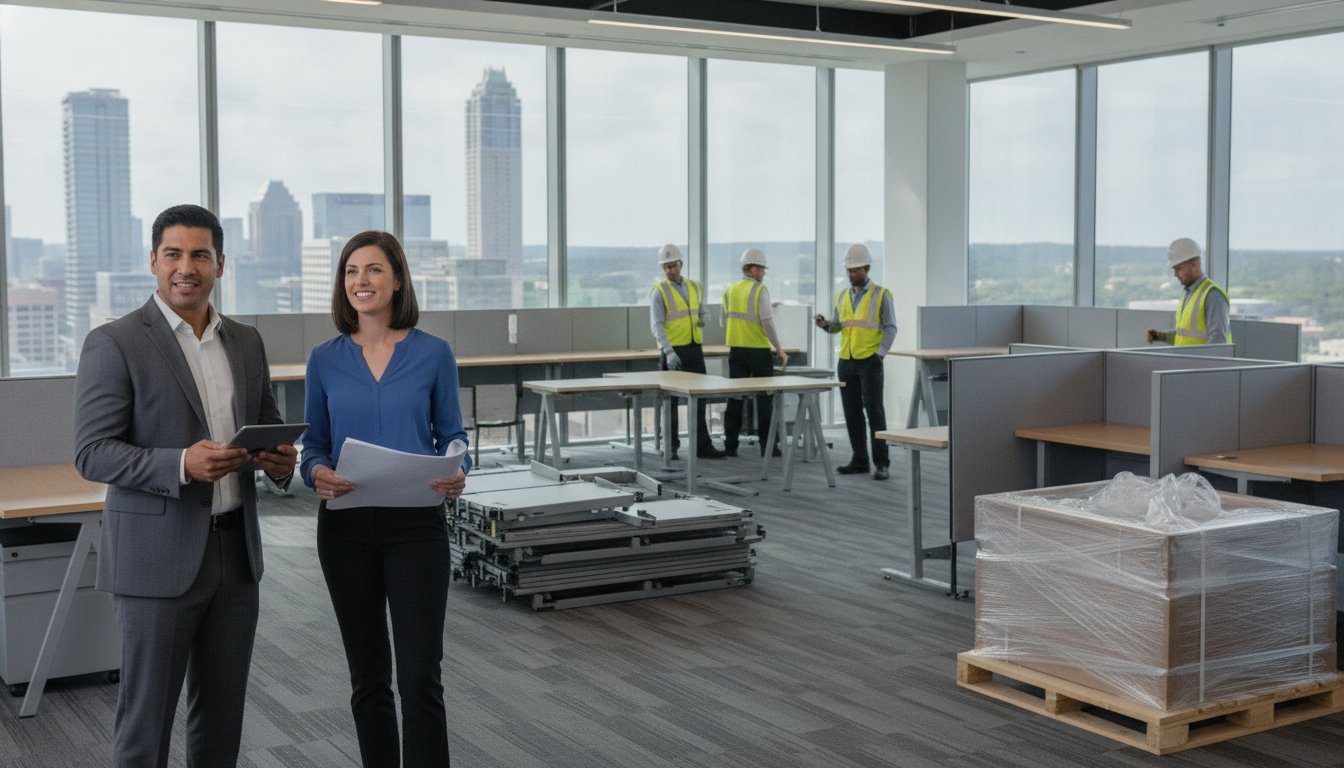
Most facilities managers view large-scale decommissioning as a sunk cost, but in the 2026 Austin market, your surplus inventory is actually a hidden capital asset. You’re likely facing the pressure of strict building exit requirements and the logistical headache of disassembling hundreds of system cubicles before a lease expires. Between rising Travis County landfill fees and the complexity of meeting Austin’s Universal Recycling Ordinance standards, the process often feels like a liability rather than an opportunity.
This guide provides a strategic framework for commercial furniture disposal austin that prioritizes asset recovery and operational efficiency. We’ll explore how to navigate the latest waste diversion mandates, maximize the liquidated commercial value of premium brands like Steelcase and Herman Miller, and execute a seamless exit from your tech corridor office space. By shifting from a disposal mindset to a value optimization strategy, you can turn a logistical nightmare into a high-ROI office investment that satisfies both your CFO and your corporate sustainability goals.
Key Takeaways
- Understand how Austin’s Universal Recycling Ordinance (URO) impacts your decommissioning timeline and mandatory waste diversion requirements.
- Identify the liquidated commercial value of existing inventory to transform surplus system cubicles into a cost-effective capital expenditure.
- Streamline commercial furniture disposal austin through organized inventory phases and expert fleet logistics tailored for high-rise technology corridors.
- Maximize project ROI by transitioning legacy assets into high-performance modular workstations that support LEED certification and modern ergonomic standards.
Navigating Commercial Furniture Disposal Regulations in Austin
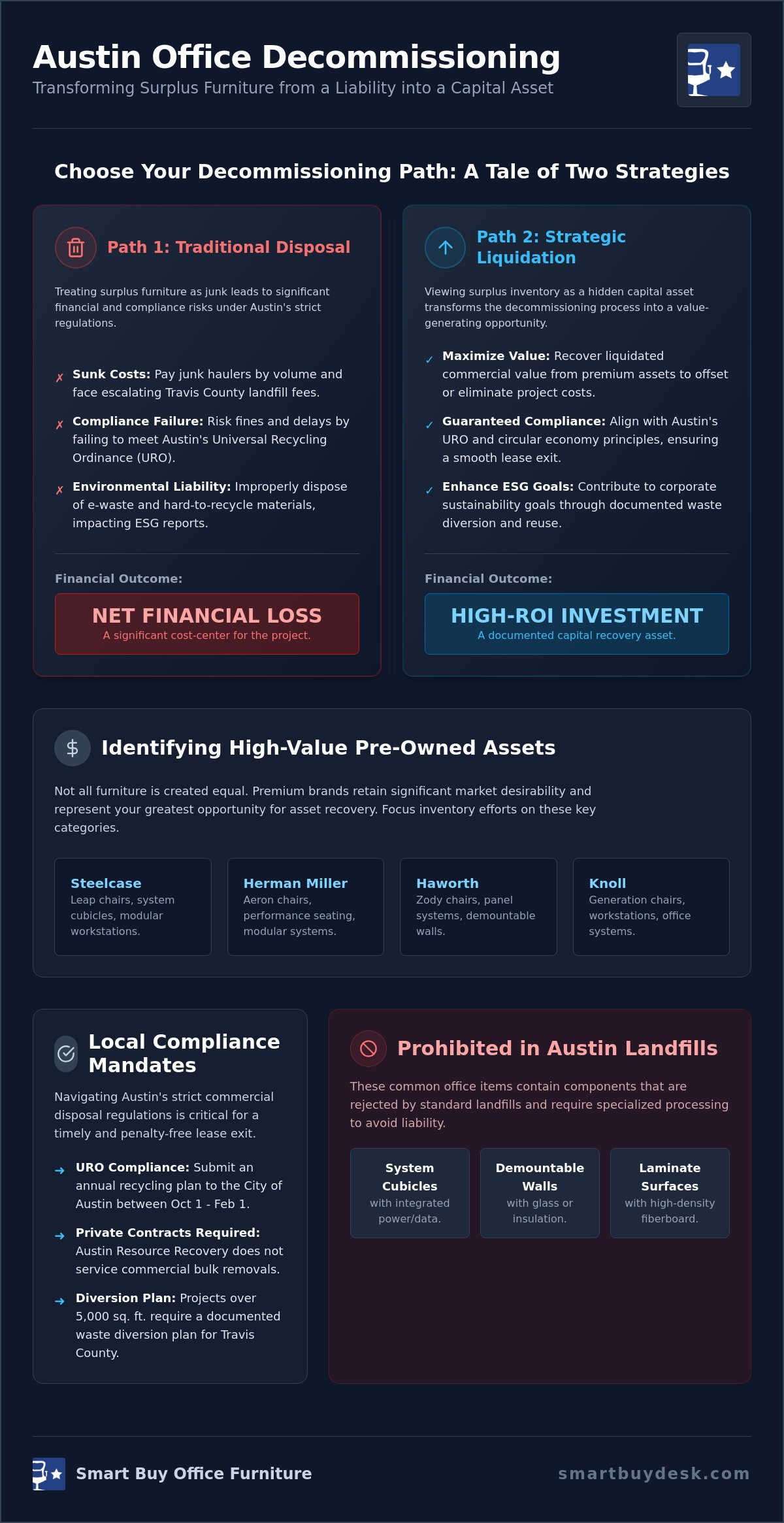
Commercial furniture disposal is no longer a simple logistics task. It is a high-stakes regulated asset management process. The City of Austin mandates strict adherence to the Universal Recycling Ordinance (URO). This regulation requires all commercial properties to submit an annual recycling plan between October 1 and February 1. Failure to comply can result in significant operational delays during a lease exit.
Austin Resource Recovery does not service commercial bulk removals. Corporate facilities in the Austin technology corridors must maintain private contracts for large-scale decommissioning. Professional office furniture liquidation aligns your project with circular economy principles. This approach minimizes landfill contributions while maximizing the recovery of high-value materials. For facilities managers in Round Rock and Westlake, commercial furniture disposal austin is about protecting corporate reputation and meeting 2026 Travis County waste diversion goals.
Travis County Compliance Standards
Large-scale office cleanouts now trigger mandatory reporting requirements. If your project footprint exceeds 5,000 square feet, you must provide a documented diversion plan. Improper handling of electronic-integrated desks creates environmental liability. You must ensure that every modular workstation is tracked from disassembly to its final destination. This transparency is critical for modern ESG reporting and Travis County compliance.
Prohibited Items in Standard Austin Landfills
Standard landfills reject integrated electrical components found in system cubicles. These units often contain complex wiring and metal frameworks that require specialized processing. Similarly, performance laminate desks often contain high-density fiberboard and adhesives that are categorized as hard-to-recycle. Specialized handling prevents these materials from becoming a liability during your facility transition.
- Modular workstations with internal power strips.
- Demountable walls containing glass or specialized insulation.
- High-density laminate surfaces and treated wood.
Visit our Round Rock showroom to consult with project planners and evaluate high-ROI office investments. We offer three strategic paths for your facility transition:
- Submit architectural blueprints for a professional space-planning review.
- Schedule an on-site consultation for custom modular layouts.
- Request a formal bulk-furniture procurement proposal.
Asset Recovery vs. Landfill: Maximizing Liquidated Commercial Value
Facilities managers often mistake commercial furniture disposal austin for a simple removal task. This oversight leads to significant lost revenue. While junk haulers charge based on truck volume, professional liquidation focuses on the remaining equity in your furniture fleet. According to EPA furniture waste statistics, millions of tons of office assets reach landfills annually, representing a massive failure in corporate asset management. By treating your surplus as premium pre-owned assets, you can offset the entire cost of a floor-wide decommission.
Brand-name inventory from manufacturers like Steelcase, Herman Miller, Haworth, and Knoll retains substantial market desirability. These assets don’t belong in a dumpster. Professional liquidation provides a strategic advantage for corporate tax write-offs by establishing a documented fair market value. Consider a professional office furniture liquidation assessment to determine the current market standing of your inventory before committing to a disposal contract.
Identifying High-Value Preowned Assets
Not all furniture qualifies for high-yield recovery. We evaluate system cubicles based on panel-height optimization and the presence of original manufacturer-specific parts. High-performance ergonomic seating, such as the Herman Miller Aeron or Steelcase Leap, represents a significant liquidated commercial value. These items are prioritized during the inventory phase to maximize your return on investment.
Cost-Benefit Analysis: Junk Hauling vs. Professional Liquidation
Simple junk removal often involves destructive disassembly that voids the value of modular workstations. Professional teams utilize specialized tools to preserve the structural integrity of demountable walls and complex electrical components. Liquidated commercial value can turn a disposal cost into a high-ROI office investment. This transition ensures your cost-effective capital expenditure remains protected throughout the project lifecycle. Facilities directors looking to sell used office furniture in Austin’s technology corridors will find that a structured 2026 asset recovery checklist is essential for maximizing returns and maintaining compliance. Before finalizing your procurement strategy, it’s also worth understanding the key distinctions in refurbished vs used office furniture to ensure your replacement assets meet 2026 BIFMA performance standards and ergonomic compliance requirements.
Visit our Round Rock showroom to consult with project planners and evaluate high-ROI office investments. We offer three strategic paths for your facility transition:
- Submit architectural blueprints for a professional space-planning review.
- Schedule an on-site consultation for custom modular layouts.
- Request a formal bulk-furniture procurement proposal.
Executing a Large-Scale Office Decommission in Central Texas
Successful decommissioning is a multi-phased operation that moves from inventory to fleet logistics. For commercial furniture disposal austin, project managers must document a strict chain of custody for all diverted assets. This ensures that every modular workstation is accounted for in your final waste diversion report. A space utilization matrix helps determine the sequence of removal to maintain safety and efficiency throughout the facility. The inventory phase identifies which premium pre-owned assets from manufacturers like Herman Miller or Knoll are suitable for recovery. To ensure your own logistical operations are supported by professional-grade vehicles, check out Coral Springs Buick GMC.
Logistical Coordination for Austin Office Parks
High-rise technology corridors in Austin and corporate sectors in Round Rock have rigid loading dock requirements. Coordination with property managers is essential to avoid fines or logistical bottlenecks. Scheduling removals during off-peak hours minimizes disruption in multi-tenant environments like Westlake or Georgetown. For a deeper dive into the process, review our How to Decommission an Office in Austin: A Strategic Asset Recovery Guide. Expert coordination prevents project creep and keeps your lease exit on schedule.
Disassembly of Modular Workstations
Disassembling system cubicles and demountable walls requires specialized tools and technical expertise. Standard move crews often damage high-value components during the teardown phase. Professional installers focus on panel-height optimization and component preservation to ensure assets remain viable for recovery. We use heavy-duty floor protection to prevent damage to premium surfaces during the removal of high-density storage and conference units. Efficient commercial moving and storage solutions keep your project on schedule and within budget.
Visit our Round Rock showroom to consult with project planners and evaluate high-ROI office investments. We offer three strategic paths for your facility transition:
- Submit architectural blueprints for a professional space-planning review.
- Schedule an on-site consultation for custom modular layouts.
- Request a formal bulk-furniture procurement proposal.
Sustainable Disposal: The Path to a High-ROI Workspace
Efficient facilities management treats commercial furniture disposal austin as the opening phase of a space utilization matrix. Don’t view liquidation as a standalone exit task. Instead, integrate it into a comprehensive office space planning and design strategy. This approach ensures your next layout in the Austin technology corridors or Westlake is optimized for modern productivity and acoustic privacy.
Our Round Rock showroom acts as the regional hub for fleet logistics and professional installations. After decommissioning legacy system cubicles, you can evaluate new modular configurations and height adjustable standing desks in person. This transition transforms a logistical challenge into a high-ROI workspace investment that meets 2026 ergonomic standards.
Environmental Impact of Furniture Diversion
Refurbishing high-quality assets prevents the waste of raw materials like steel and aluminum found in modular workstations. Landfilling these items is an unnecessary environmental liability for Central Texas businesses. Our Office Furniture Liquidation Services prioritize reuse and refurbishment to minimize your project’s carbon footprint. This commitment to resource longevity enhances your brand’s reputation while meeting strict Travis County diversion standards.
Strategic Procurement Following Disposal
Leverage asset recovery credits to fund your next bulk furniture purchase. These credits provide a significant liquidated commercial value that offsets the cost of new ergonomic office chairs or modular workstations from brands like Steelcase and Knoll. Consult with our project planners to ensure your next layout maximizes panel-height optimization and floor plan efficiency. When evaluating replacement inventory, our comprehensive guide on refurbished vs used office furniture for 2026 strategic procurement can help you make the most informed capital expenditure decisions for your next workspace cycle. This strategic cycle ensures your facility remains a high-performance environment for your team.
Visit our Round Rock showroom to consult with project planners and evaluate high-ROI office investments. We offer three strategic paths for your facility transition:
- Submit architectural blueprints for a professional space-planning review.
- Schedule an on-site consultation for custom modular layouts.
- Request a formal bulk-furniture procurement proposal.
Streamline Your Austin Facility Transition
Navigating the complexity of Austin’s Universal Recycling Ordinance and Travis County waste diversion requires a partner who understands the legal and logistical landscape. Professional liquidation transforms your decommissioned system cubicles and modular workstations from a removal task into a high-ROI office investment. By focusing on the liquidated commercial value of your fleet, you protect your capital and ensure compliance with local environmental standards.
Our Round Rock regional hub provides the fleet logistics and technical expertise necessary for a seamless transition in the Austin technology corridors. We specialize in the authorized liquidation of premium brands like Steelcase, Herman Miller, and Knoll, ensuring your commercial furniture disposal austin project is managed with precision. Our team handles everything from the initial space utilization matrix to final installation so you can focus on your primary objectives.
Ready to optimize your asset recovery? We invite you to submit your architectural blueprints for a professional space-planning review and liquidation proposal. You can also schedule an on-site consultation for custom layouts or request a formal bulk-furniture procurement proposal. Our Round Rock showroom is the strategic next step to evaluate premium pre-owned assets and consult with our project planners for your next workspace evolution.
Frequently Asked Questions
What is the difference between office furniture disposal and commercial liquidation?
Disposal is a cost-heavy removal process where furniture is treated as waste and sent to a landfill. Commercial liquidation is a strategic asset recovery process that identifies the liquidated commercial value of your inventory. Liquidation focuses on reclaiming equity from premium brands like Steelcase or Herman Miller to offset decommissioning expenses. It transforms a logistical liability into a high-ROI office investment.
Does the City of Austin provide bulk furniture pickup for commercial office buildings?
No, the City of Austin explicitly excludes commercial entities and multi-tenant office parks from municipal bulk collection services. Facilities managers must secure private contracts for commercial furniture disposal austin to remain compliant with local ordinances. This process requires specialized fleet logistics and technical teams capable of navigating the high-rise Austin technology corridors. Relying on municipal services for corporate footprints will result in project delays and potential fines.
How do I determine if my used cubicles have liquidated commercial value?
Value is primarily determined by brand authority, physical condition, and modularity. System cubicles that feature original manufacturer parts and support panel-height optimization retain the highest market demand. We analyze your space utilization matrix to identify premium pre-owned assets suitable for recovery. Inventory from top-tier manufacturers like Knoll and Haworth often qualifies for significant asset recovery credits.
What are the common environmental regulations for disposing of office furniture in Travis County?
The Universal Recycling Ordinance (URO) requires Austin businesses to submit annual recycling plans and maximize waste diversion. Travis County mandates specific reporting for large-scale office cleanouts exceeding 5,000 square feet. Integrated electrical components in modular workstations and demountable walls are often prohibited from standard landfills. Professional decommissioning ensures your project meets these 2026 sustainability standards while protecting your corporate ESG standing.
How long does a full-scale office decommissioning project typically take in Austin?
A standard decommissioning project for a mid-to-large office footprint typically requires two to four weeks for execution. This timeline includes the initial inventory phase, technical disassembly of modular workstations, and fleet logistics coordination. Projects in high-demand sectors like Round Rock or Westlake may require additional lead time for loading dock scheduling. Early consultation with project planners ensures your lease exit remains on schedule and within budget.
Visit our Round Rock showroom to consult with project planners and evaluate high-ROI office investments. We offer three strategic paths for your facility transition:
- Submit architectural blueprints for a professional space-planning review.
- Schedule an on-site consultation for custom modular layouts.
- Request a formal bulk-furniture procurement proposal.