
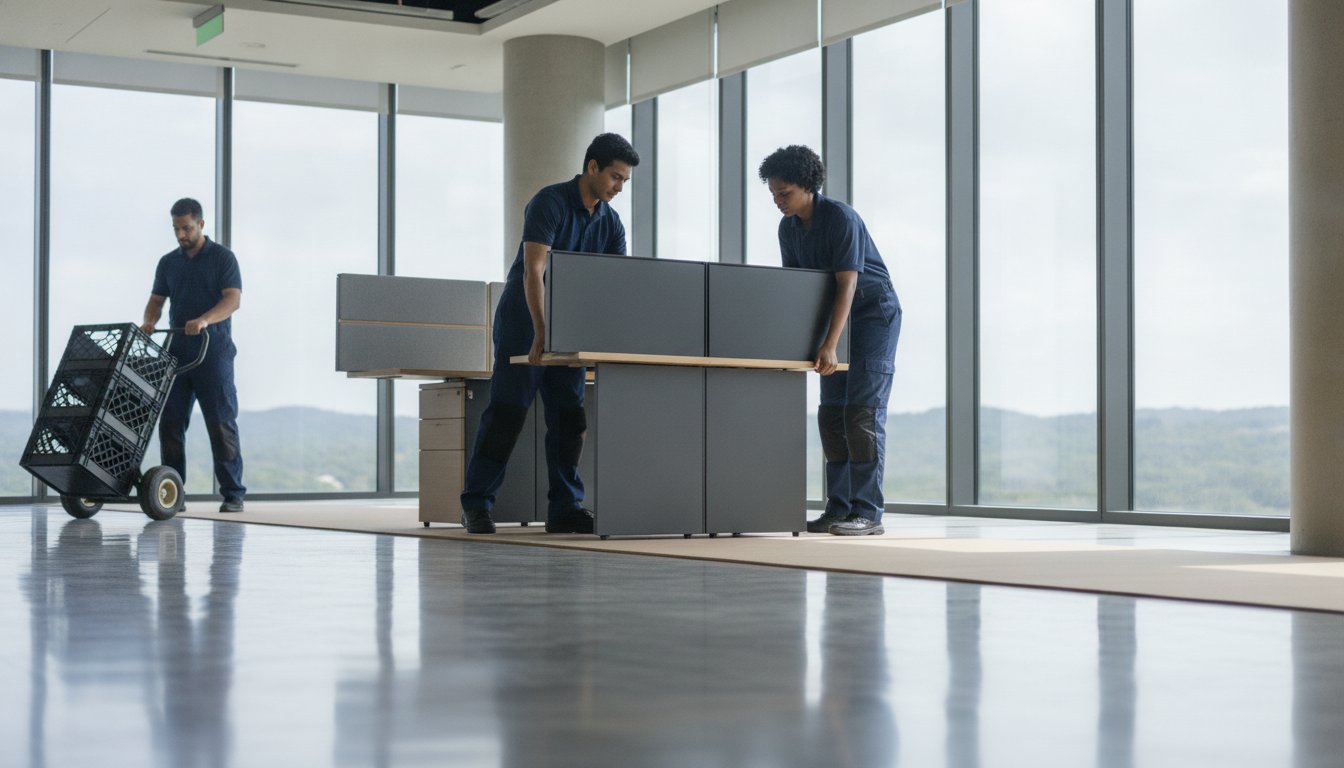
A single deep gouge in your Westlake office’s polished concrete can cost more in lease-end penalties than the entire furniture reconfiguration itself. In the high-stakes corporate sectors of Round Rock and Austin, facility directors recognize that floor damage isn’t just an eyesore. It is a direct hit to your capital expenditure budget. You already understand that managing the movement of heavy modular workstations and systems furniture requires a level of precision that goes beyond basic logistics. Poor site preparation leads to more than just surface scratches; it creates operational delays that stall productivity.
This guide masters the professional protocol for how to protect floors when moving office furniture, ensuring your facility maintains its aesthetic and financial value throughout the project. We provide the technical framework for safeguarding high-traffic commercial carpets and specialized surfaces during large-scale relocations or decommissionings. You will learn how to evaluate floor load requirements, select professional-grade protection materials like Builder Board, and coordinate fleet logistics for a zero-damage transition across Williamson County technology corridors.
Key Takeaways
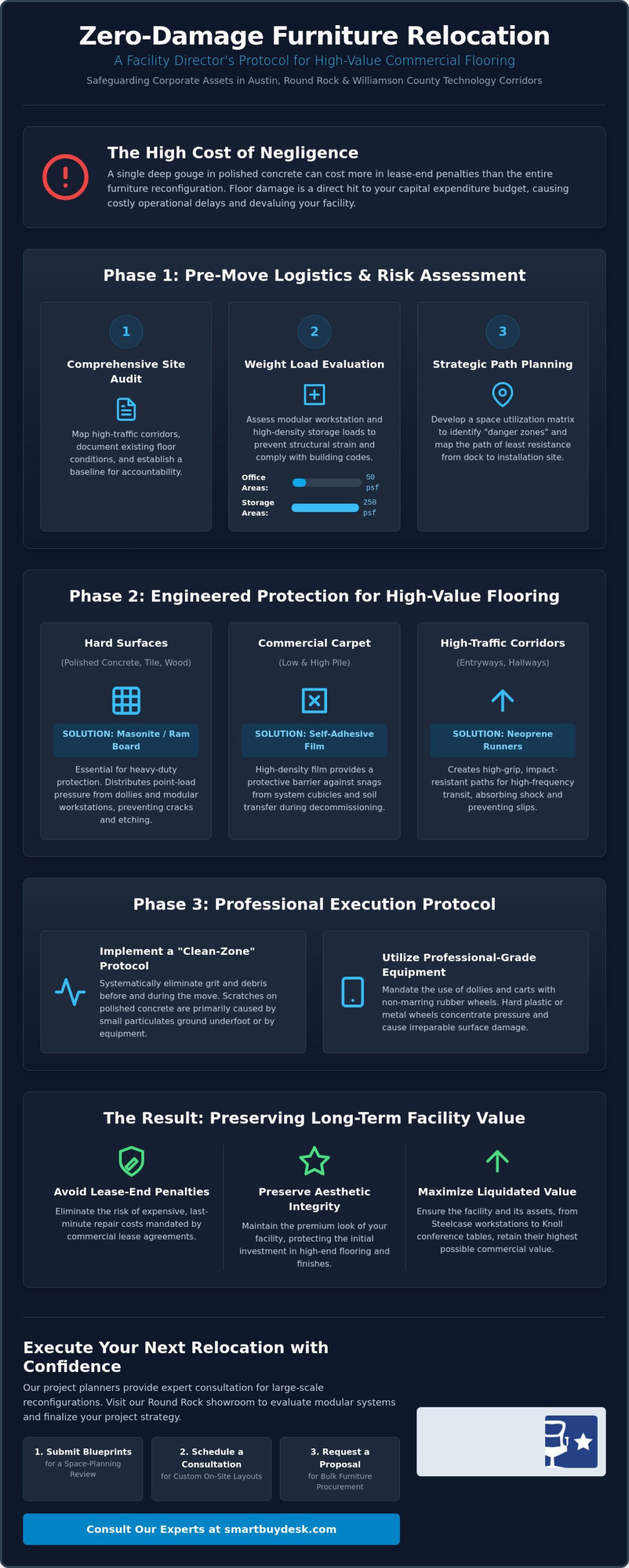
- Conduct a comprehensive site audit to map high-traffic corridors and evaluate the specific weight loads of modular workstations and high-density storage.
- Learn how to protect floors when moving office furniture by deploying engineered materials like Masonite or self-adhesive carpet film to prevent surface damage.
- Implement a “Clean-Zone” protocol that eliminates grit and debris, which are the primary causes of scratches on polished concrete and laminate surfaces.
- Utilize professional-grade transport equipment, including dollies with non-marring rubber wheels, to ensure smooth transitions across diverse flooring types.
- Preserve the long-term aesthetic and liquidated commercial value of your facility while avoiding expensive lease-end repair penalties.
Pre-Move Logistics: Assessing Risks for Modular Workstation Reconfigurations
Enterprise-grade relocation begins with a rigorous site audit rather than a moving truck. Protecting the liquidated commercial value of your facility requires identifying high-traffic corridors and transition points before the first panel is disassembled. Integrating Facility management best practices ensures that your project remains compliant with lease agreements and insurance requirements. Documenting existing floor conditions with high-resolution photography establishes a vital baseline for accountability during large-scale reconfigurations.
You must evaluate the weight load of modular workstations and high-density storage cabinets to prevent structural strain. Building codes like ASCE 7 specify that office occupancies require a minimum live load of 50 pounds per square foot (psf), while heavy storage areas need 250 psf. Coordination with facility management regarding elevator and loading dock availability is essential for maintaining momentum in Austin technology corridors or Round Rock corporate sectors.
To better understand the fundamentals of surface protection, watch this professional overview:
Mapping the Space Utilization Matrix
A sophisticated space utilization matrix identifies “danger zones” where heavy assets like modular conference tables or premium pre-owned assets will be staged. Your team should plan the path of least resistance from the loading dock to the final installation site. This strategic pathing is a core component of how to protect floors when moving office furniture, as it minimizes the footprint of heavy equipment transit. Map out every turn to ensure that panel-height optimization doesn’t conflict with low-hanging lighting or overhead HVAC infrastructure.
Surface-Specific Risk Mitigation
Different surfaces demand specialized protection strategies to avoid costly repairs. Polished concrete is susceptible to etching from grit, while premium commercial-grade carpeting can snag under the weight of system cubicles from manufacturers like Steelcase or Herman Miller. Determine if your project requires specialized commercial moving and storage protocols to handle the transition between Westlake’s high-end finishes and Williamson County’s industrial footprints. This assessment dictates the specific protective materials your fleet logistics team will deploy.
Engineered Protection Materials for High-Value Commercial Flooring
When determining how to protect floors when moving office furniture, you must select materials based on the specific surface density and the expected traffic volume of the relocation fleet.
- Masonite or Ram Board: These are essential for heavy-duty protection under rolling dollies, pallet jacks, and heavy modular workstations.
- High-density, self-adhesive carpet film: This material prevents snags and soil transfer during the decommissioning of large office footprints.
- Neoprene floor runners: These provide high-grip, impact-resistant paths for high-frequency entry points and hallways.
Hard Surface Defense: Tile, Wood, and Polished Concrete
Masonite remains the industry standard for protecting premium pre-owned assets during transit across hard surfaces. It distributes weight evenly, preventing the point-load pressure that cracks ceramic tiles or etches polished concrete. Avoid adhesive transfer on sensitive finishes by using technical-grade tape or specialized non-staining floor protection paper for light-duty paths. These methods ensure a smooth transition without leaving chemical residue that compromises the building’s aesthetic value.
Commercial Carpet Preservation
Selecting the right film is a critical step in how to protect floors when moving office furniture, especially when dealing with low-pile corporate carpets. Use a 3-mil or higher high-density film to prevent tearing when moving heavy Steelcase or Herman Miller workstations. For long-term staging, use plywood squares under heavy pedestals to prevent permanent compression marks. If you’re planning a large-scale reconfiguration, our team provides professional office furniture delivery and installation to manage these technical details with precision.
Professional Execution: Coordinating Fleet Logistics and Installation
Execution of a $100,000 furniture reconfiguration requires strict operational discipline. Implement a “Clean-Zone” protocol to eliminate grit and construction debris before transport begins. This single step is the most effective way for how to protect floors when moving office furniture across large-scale footprints. Grit trapped under equipment acts like sandpaper, causing irreversible damage to polished concrete and laminate surfaces.
Replace amateur felt sliders with professional-grade dollies featuring non-marring rubber wheels. These wheels absorb impact and prevent the lateral friction that causes permanent scuffing on tile or wood. All installation teams must follow a mandatory “Lift, Don’t Slide” policy for every piece of ergonomic seating and file cabinet in the inventory. Scheduling a post-installation inspection ensures floor integrity is verified before the final project hand-off.
The Role of Full-Service Installation Teams
Professional office furniture installation reduces liability for facilities managers by shifting the risk to the contractor. Expert teams leverage commercial moving and storage to phase reconfigurations, ensuring that staging areas don’t become bottlenecked. This structured approach preserves the aesthetic value of your workspace during complex system cubicle deployments. Mastering how to protect floors when moving office furniture requires this specific blend of engineered materials and disciplined labor.
Central Texas Logistics and Regional Showroom Support
Coordinating fleet logistics across the Austin technology corridors and Round Rock corporate sectors requires deep local expertise. Our Round Rock hub serves as a regional center where executives evaluate modular workstations and panel heights before final procurement. We manage the complexities of Williamson County logistics, from Westlake corporate offices to Georgetown developments. This regional support ensures your high-ROI office investments are handled with technical precision from the loading dock to the final floor-plan layout.
Strategic Workspace Planning for Facilities Managers
Protect your facility investment by partnering with the Central Texas experts in commercial furniture logistics. Visit our Round Rock showroom to test modular configurations and consult with our project planners. Take the next step in your facility optimization:
- Option 1: Submit architectural blueprints for a professional space-planning review.
- Option 2: Schedule an on-site consultation for custom workspace layouts.
- Option 3: Request a formal bulk-furniture procurement proposal for your facility.
Optimize Your Facility Transition Protocols
Successful workspace reconfigurations depend on the intersection of technical site audits and industrial-grade protection. You now have the framework for how to protect floors when moving office furniture by deploying Masonite shielding and enforcing strict “Lift, Don’t Slide” policies. These protocols safeguard your high-ROI office investments, from Herman Miller systems to Steelcase workstations, across the Austin technology corridors. Proactive logistics management ensures your building maintains its aesthetic value and remains compliant with lease-end requirements.
Smart Buy Office Furniture provides expert coordination for commercial projects ranging from $10,000 to over $150,000. Our full-service installation and liquidation teams specialize in the intelligent management of physical assets throughout Round Rock and the surrounding Williamson County area. Visit our showroom to test modular configurations and consult with our project planners on your next major footprint change.
Take the next strategic step for your facility by selecting one of these professional options:
- Submit your architectural blueprints for a professional space-planning review and logistical consultation.
- Schedule an on-site consultation for custom workspace layouts.
- Request a formal bulk-furniture procurement proposal.
We look forward to facilitating a seamless and damage-free transition for your corporate environment.
Frequently Asked Questions
How do I protect commercial carpets when moving heavy used cubicles?
Utilize 3-mil high-density, self-adhesive carpet film to prevent snags and soil transfer during the move. For heavy used cubicles from manufacturers like Herman Miller or Steelcase, layer Masonite sheets over the film in high-traffic corridors. This prevents the point-load pressure of dollies from crushing carpet fibers or causing permanent delamination. It’s a critical protocol for maintaining the liquidated commercial value of your facility during large-scale workspace reconfigurations.
What is the best way to move height-adjustable standing desks without scratching the floor?
The most effective method is utilizing professional-grade dollies with non-marring rubber wheels rather than sliding the desk feet. Sliding heavy steel frames across polished concrete or laminate causes permanent etching. Always ensure height adjustable standing desks are at their lowest height setting to lower the center of gravity. This is a primary method for how to protect floors when moving office furniture while preserving the ergonomic integrity of your fleet.
Should I use Masonite or cardboard for floor protection during an office move?
Masonite is the industry standard for commercial reconfigurations because it distributes the weight of heavy assets across a wider surface area. Cardboard lacks the compressive strength to protect against the 250 psf loads common with high-density storage and modular workstations. While cardboard might work for light debris, Masonite prevents the structural floor damage often seen during the transport of large office fleets in the Austin technology corridors and Round Rock corporate sectors.
Do professional office furniture installers provide their own floor protection materials?
Full-service office furniture installation teams typically include floor protection materials as a standard part of their logistical planning. When you coordinate a high-ticket project through our Round Rock regional hub, our teams arrive equipped with Ram Board, Masonite, and specialized runners. This comprehensive service model reduces liability for facilities managers and ensures a zero-damage transition. It’s the most cost-effective way to manage large-scale capital expenditures without risking expensive lease-end penalties.